1
Focused Session Modes
Users can start guided focus blocks with a calm timer and structured break rhythm.
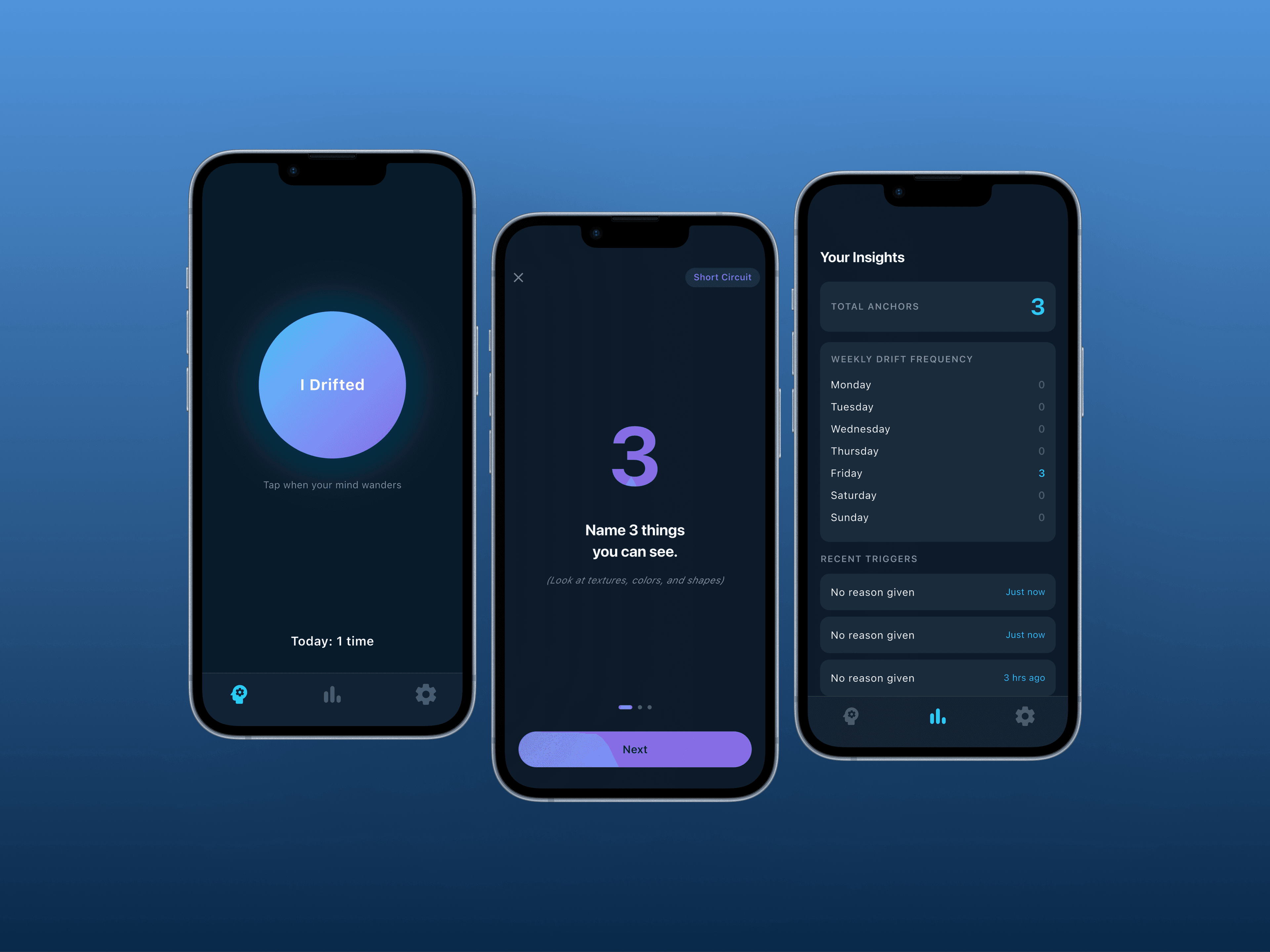
MindAnchor is a productivity-focused mobile concept built to help users reduce distractions and maintain mental clarity. The app blends simple routines and focused interaction design to support deep work and intentional study blocks.
People often switch contexts too quickly, leading to fragmented attention and burnout. Many focus tools add complexity with noisy interfaces and too many controls, making it harder for users to stay mentally grounded.
The goal was to create an app that feels calm, lightweight, and instantly usable while still giving users meaningful progress feedback. The experience had to work well for both short focus sprints and longer study sessions.
I designed a minimal flow centered around starting focus sessions quickly, keeping key actions visible, and reducing unnecessary interface decisions. Local-first persistence was used to maintain performance and privacy without backend complexity.
Users can start guided focus blocks with a calm timer and structured break rhythm.
A minimal visual language with clear hierarchy to reduce cognitive noise during work.
Simple journaling prompts help users reset attention and reflect after each session.
Session streaks and productivity history are saved locally for fast, private access.
I led product direction and UX/UI design from concept to high-fidelity interface. This included user flow mapping, component-level interaction design, visual system definition, and iteration on readability and pacing across all primary screens.
The main challenge was balancing simplicity with utility. Through iterations, I learned that removing optional controls and relying on stronger typography hierarchy improved focus outcomes more than adding advanced configuration features.
MindAnchor became a polished concept demonstrating intentional UX for focused productivity. The final result communicates calmness, direction, and measurable progress while staying approachable for first-time users.
Future versions would add adaptive session recommendations, richer analytics, optional ambient soundscapes, and accessibility-focused modes for neurodivergent users. User testing would guide feature prioritization in the next iteration.
Explore More Work